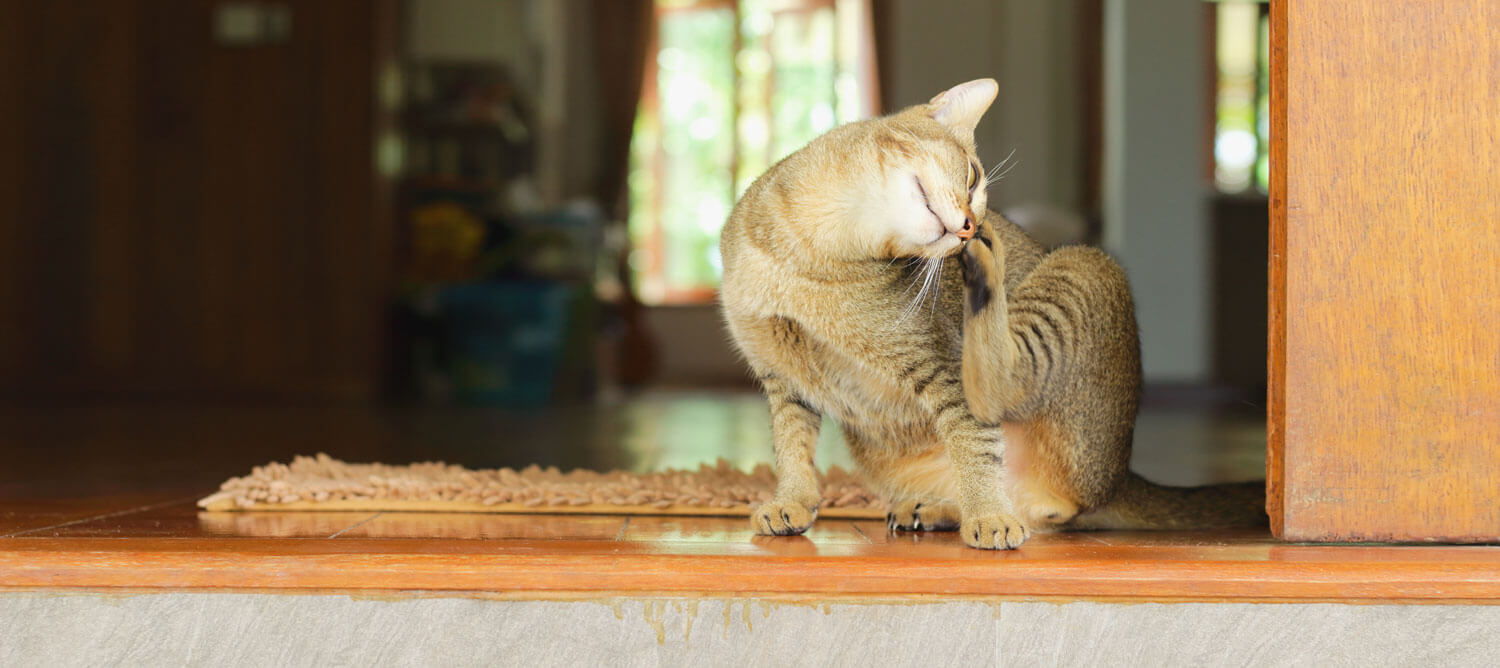

Functionally, grooming helps keep your cat looking their best, with all that fur it takes time to keep the perfect ‘do. Some cats, however, can take their grooming habits a bit too far. Over-grooming can be a common problem in cats, it can cause problems such as undue hair loss, matting, excessive fur balls and in some cases skin irritations.
Why is your cat over-grooming?
Overgrooming is when a cat licks or chews excessively, often to the point of hair loss, skin damage, or bald patches. The underlying reasons are usually:
- Medical causes: Allergies (food or environmental), fleas, mites, infections, or pain (e.g., arthritis).
- Stress or anxiety: Changes in environment, new pets, loud noises, or lack of stimulation.
- Boredom or compulsive behavior: Especially in indoor cats with no enrichment.
Real example: Cats living in small apartments with no vertical spaces or window access often develop stress-related grooming issues.
Why this is important: Overgrooming is a symptom, not a diagnosis. Ignoring it can lead to infections or mask deeper issues like allergies or anxiety disorders.
How do I get my cat to stop overgrooming?
Stopping overgrooming means treating the root cause. Here are essential steps:
Visit a vet to rule out parasites, allergies, pain, or infections.
Flea treatment: Even indoor cats can get fleas from shoes, other pets, or air vents.
Stress reduction:
- Provide vertical climbing spots and hiding areas.
- Use pheromone diffusers like Feliway.
- Stick to consistent routines.
Enrichment tips:
- Puzzle feeders
- Daily playtime
- Safe window views
Why this matters: Punishing or distracting your cat won't fix overgrooming. Addressing stress or medical triggers is the only effective route.
How can you tell the difference between flea dirt and garden dirt?
To distinguish flea dirt (flea faeces) from regular dirt:
- Appearance: Flea dirt looks like black pepper flakes.
- Water test: Place the specks on a damp paper towel. Flea dirt will turn reddishbrown (digested blood), while garden dirt stays black or grey.
Real example: Vets often perform this test during consults. Flea dirt is common on the back, neck, and base of the tail.
Who this matters for: Any cat with itchy skin or hair loss should be checked for flea dirt — it’s a common cause of overgrooming.

Which cat breeds are more susceptible to overgrooming?
Some breeds are more prone to stress or skin sensitivities:
- Siamese: Highly vocal, intelligent, and emotionally sensitive.
- Oriental Shorthair: Prone to compulsive grooming under stress.
- Bengal: Active and easily bored; often overgrooms from frustration.
- Devon Rex and Sphynx: Skin-sensitive and prone to dermatological issues.
Example: A Siamese left alone for long periods may start grooming its belly bald from separation anxiety.
How can a visit to the vet help a cat with overgrooming?
A vet helps by identifying the underlying cause and building a personalised treatment plan. Key benefits:
- Physical exam: Identifies parasites, pain points, or infection.
- Skin tests: Rule out mites, bacteria, fungal infections.
- Allergy workups: May include food trials or intradermal testing.
- Behavioural evaluation: If no physical cause is found, stress or OCD may be
diagnosed.
Vets may also refer you to veterinary dermatologists or behaviourists for advanced cases.
What medication is used for overgrooming cats?
Medications depend on the cause:
- Flea treatment: BravectoPlus, Nexgard Spectra, Revolution
- Allergy meds: Antihistamines or corticosteroids
- Pain relief: For arthritis-related grooming
- Anxiety meds: Fluoxetine or clomipramine
- Topical treatments: Antimicrobial or anti-itch sprays to soothe affected areas.
Important: All medications are prescribed only after thorough evaluation and must be carefully dosed for cats. Flea treatments can be purchased without a vet consult.
Why it’s important: Medication is only one piece — it should always be paired with environmental changes and enrichment.