
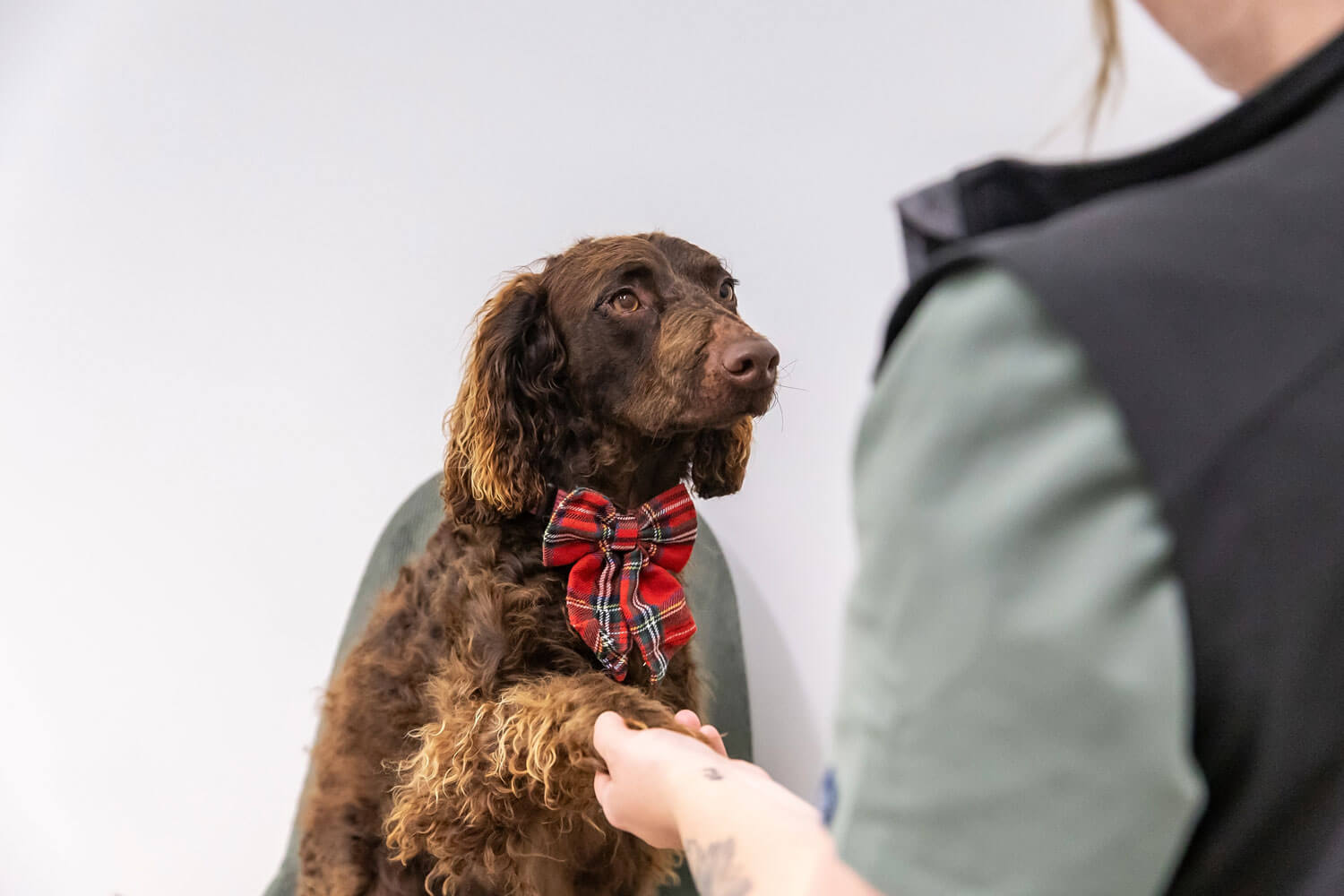

We know that deciding to spay your dog is a big milestone in her life. As a pet parent, it is completely natural to feel a little anxious about surgery. Our goal is to make sure you have all the facts so you can choose the best, safest, and most comfortable option for your furry family member.
Currently, there are two primary methods for spaying a dog at Mornington Veterinary Clinic: the Traditional Spay (Ovariohysterectomy) and the Laparoscopic (Keyhole) Spay (Ovariectomy).
What is a Traditional Spay?
The traditional spay (Ovariohysterectomy) is the standard surgical method that has been used by veterinarians for decades.
During this surgery, the veterinarian will remove both ovaries and the uterus through a 3-6cm incision. Because the surgeon needs to physically visualize and access the organs through this single opening, the ligament that attaches the ovary to the body wall must be stretched or gently broken down which can contribute to some discomfort post operatively.
Pros of Traditional Spay:
- Cost-Effective: Because it does not require specialized, high-tech equipment, it is typically the more affordable option.
- Proven Track Record: It is a routine, highly practiced surgery throughout almost every veterinary clinic and as a result the outcomes are generally positive.
Cons of Traditional Spay:
- More Post-Operative Pain: Stretching/breaking the ovarian ligament causes more bruising and post-operative discomfort.
- Longer Recovery Time: Dogs require strict rest and restricted activity for 10 to 14 days to ensure the larger abdominal incision heals properly.
- Larger Incision: A bigger incision means a larger scar and a slightly higher chance of the dog irritating the wound.
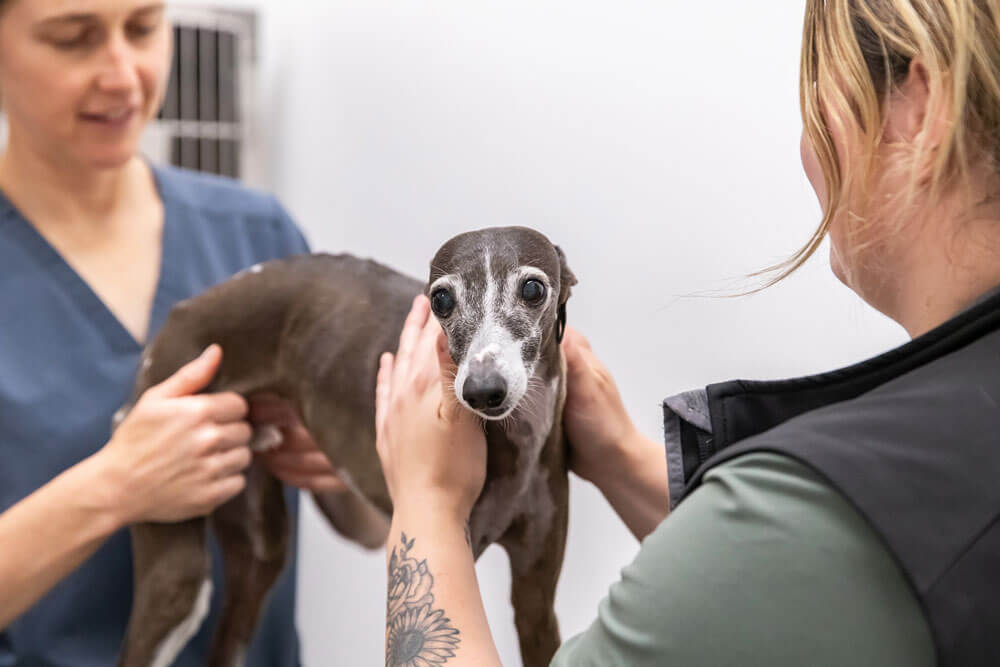
What is a Laparoscopic Spay?
A laparoscopic spay (often called a "keyhole" spay) is a modern, minimally invasive alternative to the traditional method.
Instead of one large incision, the surgeon makes two small incisions (usually about 0.5-1cm long). A specialized camera (laparoscope) is inserted through one incision, displaying a highly magnified view of the abdomen on a monitor. Specialized cauterising instruments are then passed through the other incision and allow us to safely complete the procedure with minimal bleeding and patient discomfort.
In this procedure, usually, only the ovaries are removed (Ovariectomy). The ovarian ligament is carefully cut and cauterized rather than being stretched, which significantly reduces internal trauma and as a result considerably reduces pain and discomfort during the procedure and postoperatively.
Pros of Laparoscopic Spay:
- Significantly Less Pain: Studies show that dogs experience up to 65% less pain after a laparoscopic spay compared to a traditional spay due to the reduced tissue handling throughout the procedure. (Devitt et al., 2005)
- Faster Recovery: Most dogs are back to their normal, happy selves within just 2-3 days, and can return to normal behaviour within 7-10 days (Devitt et al., 2005)
- Smaller Incisions: Smaller keyhole incisions heal much faster and are far less likely to be chewed or infected.
- Better Visibility for the Surgeon: The magnified camera provides the surgeon with an incredibly clear, detailed view of your dog's internal organs, leading to a safer and more precise procedure.
Cons of Laparoscopic Spay:
- Higher Cost: The use of advanced cameras, monitors, and specialized surgical instruments means this procedure costs more than a traditional spay. Our services page has a little more detailed information about the cost of desexing in Mornington Vet.
- Clipped Area: A slightly larger area of fur on the belly may need to be clipped to maintain a sterile field for the instruments.
- Not suitable for all patients: Certain health conditions may preclude proceeding with laparoscopic surgery, this can be discussed with our veterinarians prior to the procedure.
So, what is better?
To summarize, here are the key differences between traditional sterilization and laparoscopy:
| Feature | Laparoscopic (Keyhole) Sterilisation | Traditional Sterilisation |
|---|---|---|
| Procedure type | Minimally invasive surgery using a camera and specialised instruments inserted through small incisions. | Open surgical procedure with direct access to organs through a larger incision. |
| Animal gender | Primarily performed on female dogs (ovariectomy). | Performed on both male and female dogs. |
| Procedure duration | Typically similar or slightly shorter due to precision and reduced bleeding. | Standard duration; may take longer depending on complexity. |
| Recovery time | Faster recovery; most dogs return to normal activity within a few days. | Longer recovery; activity restriction often required for 10–14 days. |
| Post-operative pain | Significantly reduced due to minimal tissue trauma. | Moderate discomfort due to tissue stretching and larger incision. |
| Incision size | Two small incisions (usually 0.5–1 cm each). | One larger incision (typically 3–6 cm). |
| Number of incisions | Usually two small “keyhole” incisions. | One larger abdominal incision. |
| Surgeon visibility | Magnified, high-definition camera provides excellent visibility and precision. | Direct visual access without magnification. |
| Risk of complications | Lower risk of infection, swelling, and wound irritation. | Slightly higher risk due to larger incision and tissue handling. |
| Cost | Higher due to advanced equipment and specialised training. | More affordable and widely available. |
| Suitability for all animals | Not suitable for all patients; depends on health status and specific conditions. | Suitable for most dogs and remains the standard option. |
It's ok if, after reviewing all this information, you're unsure what to do.
Will it be too painful for your pet? Does it make sense to pay more for a routine procedure? Many questions often arise. As a local veterinary clinic, building long-term, trusting relationships with pet owners is our top priority. So, even if you haven't made a decision yet, feel free to contact us and ask any questions. After all, no matter how much information you read online, everyone’s situation is individual.