
Unless they’ve just tucked into a seafood meal or rolled around on the beach, the cause is mostly likely a fluid-like secretion coming from your pets anal glands.
What are the anal glands?
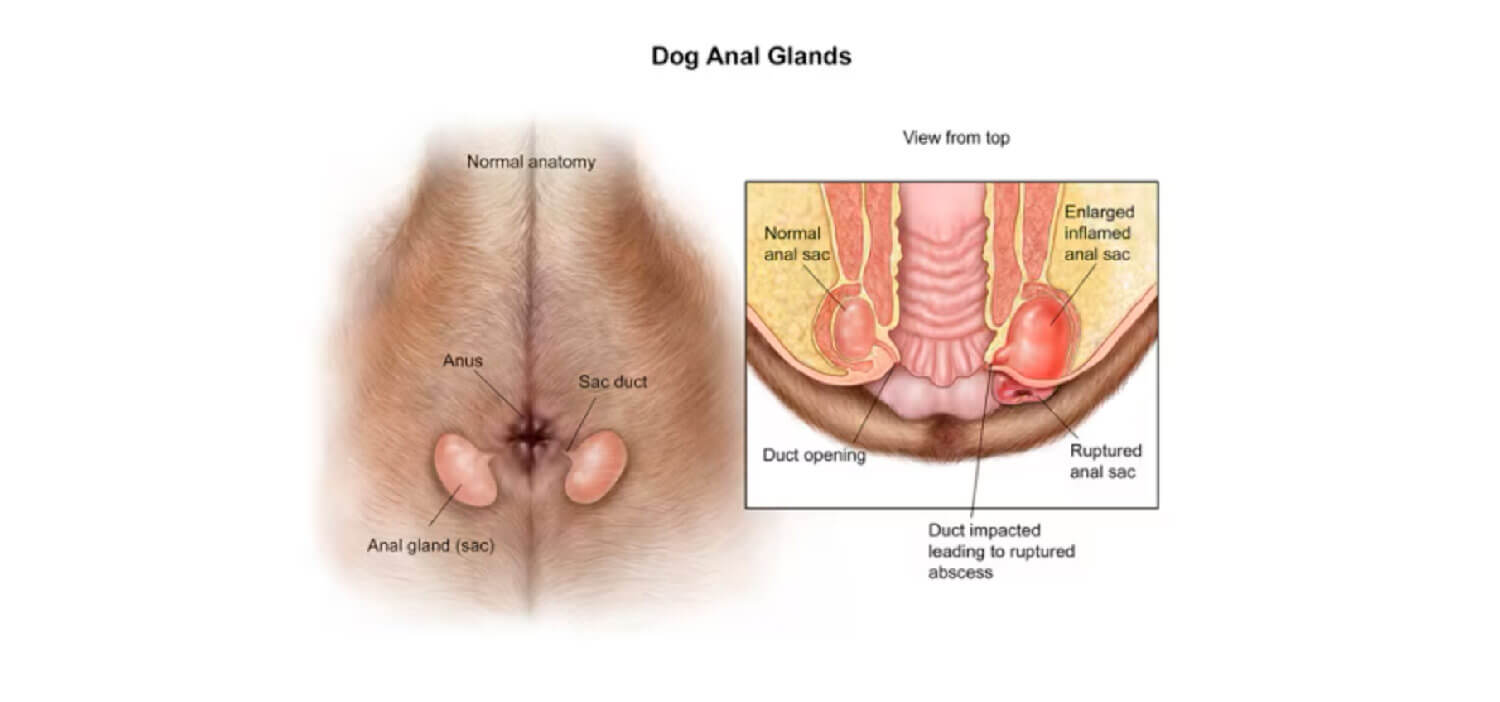
The anal glands are found within the anal sacs, two small pouches on either side of the anus. These glands line the walls of the anal sacs and produce a foul- smelling liquid that acts as a territorial markers.
The anal sacs are expressed by muscle contractions whenever the dog/cat passes stool or when they are startled/injured or excited. The fluid is released through a small duct that opens just inside the anus.
Anal sac disease
Dogs are more often affected by anal sac disease than cats. The most common conditions are:
- Anal sac impaction - failure of the anal sacs to discharge resulting in hardening and accumulation of the content which can be very
- Anal sacculitis - inflammation of the anal sacs.
- Anal sac abscess - bacterial infection of the sacs, usually following impaction. The abscess can sometimes burst and blood/pus can be seen draining onto the skin and haircoat around the anus.
- Anal sac neoplasia - older dogs can develop cancer of the glands within the anal sacs called adenocarcinoma.
Common symptoms of anal sac disease
Most affected animals present with one or more of the following:
- Scooting (dragging the rear end along the ground)
- Licking or chewing at perianal region
- Swelling (abscess) at the anus
- Reluctance to sit or lift tail
- Fresh blood on stool.
Diagnosis and treatment
The diagnosis is made based on your pet's symptoms and a physical exam performed by your veterinarian. During the physical exam, the veterinarian will perform a digital rectal palpation to assess and express the anal sacs. Inflammation (pain, redness, heat and swelling) may be present when a dog or cat has anal sac disease and the material in the sacs can be dark/chunky or clay like/bloody or purulent. Abscessation or anal sac masses can also be detected during the
physical examination. In some cases, sedation may be required if the pain or discomfort of the examination is too much.
The main aim of treatment is to express the anal sac content to relieve impaction and treating any infection present.
Prognosis
For most patients with anal sac disease, the prognosis is good to excellent with treatment. Some dogs have recurrent anal sac impactions or abscesses. Conditions such as obesity, changes in stool consistency (diarrhea or constipation) and possibly skin allergies may predispose dogs to anal sac conditions. In patients with ongoing or recurrent issues that do not respond to lifestyle and dietary changes, supplements or medications, it may be recommended to have the anal sacs surgically removed.